

Michigan winters can be tough—snow, ice, and wind quietly take a toll on your home. Because of this, spring maintenance for homes in Michigan is one of the most important steps you can take to protect your investment.
At Little Valley Homes, we believe a well-maintained home performs better, lasts longer, and avoids costly repairs. With a little attention each spring, you can stay ahead of problems before they start.
Here’s your Little Valley Homes Spring Checklist:
🔍 1. Check Smoke & CO2 Detectors
First, safety should be at the top of every list. Nothing is more important than protecting yourself and your loved ones from fire or carbon monoxide.
For example, detectors that use AA or 9V battery backups should be changed annually. In addition, newer detectors may have built-in batteries, so be sure to replace them once they reach the end of their lifespan.
Finally, don’t forget that all smoke and CO2 detectors have expiration dates. Be sure to check the labels and replace them as recommended by the manufacturer.
👉 Always follow manufacturer guidelines for replacement.
🏠 2. Inspect the Roof
Over time, wind, rain, snow, and ice damming all take a toll on your roof. Because of this, annual maintenance and small repairs can significantly extend its lifespan.
Start by looking for loose, cracked, or missing shingles.
Next, inspect flashing around vents and chimneys. Additionally, check for soft spots or signs of ice damming.
If needed, reseal any roof penetrations to prevent future leaks.

🌧 3. Clean Gutters & Downspouts
As spring arrives, Michigan rains can quickly overwhelm clogged gutters.
To prevent this, clear out leaves and debris and make sure water is draining properly.
Ideally, water should be directed at least 3–5 feet away from your home’s foundation or skirting.
🧱 4. Check Skirting & Ventilation
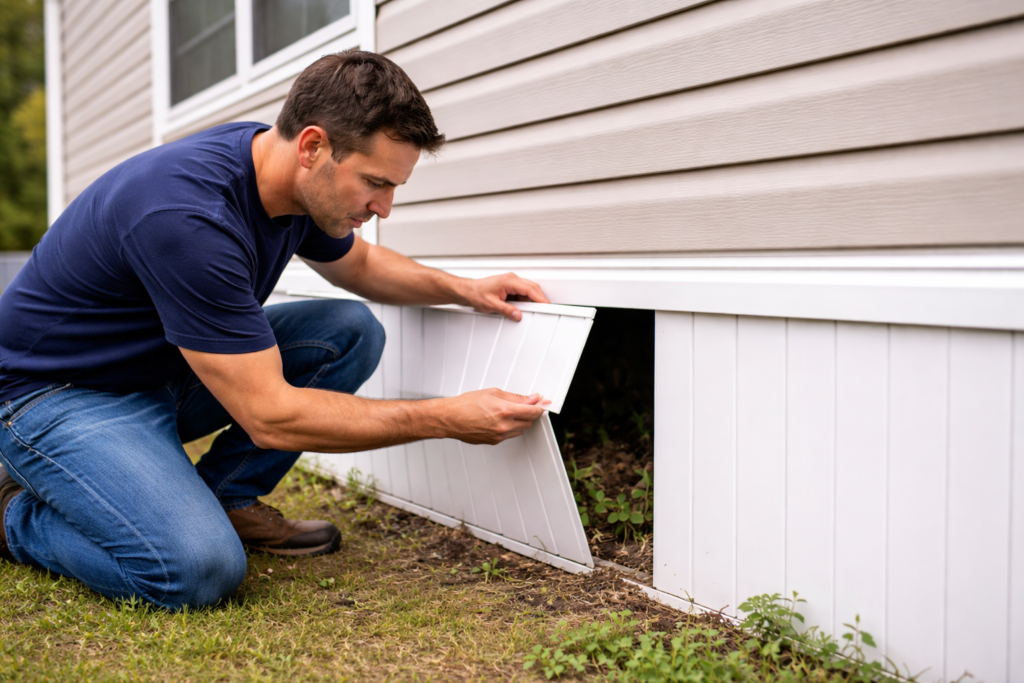
During winter, frost and ground movement can shift skirting panels out of place. As a result, it’s important to ensure panels remain secure while still allowing for natural movement during freeze and thaw cycles.
- Aluminum and vinyl panels should fit between the bottom track and frost cap while still having room to move
- Close any gaps between or under panels where animals could enter
- However, panels should never be screwed into place, as this can cause sections to bend or pop out during ground movement
In many cases, the issue isn’t just panel movement—skirting tracks can become packed with dirt, debris, and overgrown sod. Because of this, panels may be difficult to reposition properly.
- To fix this, clean out the bottom track using a screwdriver or scraper to remove built-up dirt and grass
- Once cleared, panels can be moved back into proper alignment much more easily
- Additionally, installing gutters on your home can help prevent water runoff from washing soil into the track, reducing buildup and helping maintain proper skirting alignment over time.
Finally, clean out lint from dryer vents using a shop vac and brush to reduce fire risk. Not only will this be a safety measure, but will also allow your dryer to work more efficiently and help increase its lifespan.
❄️ 5. Service Your HVAC System
Before summer arrives, it’s important to make sure your system is ready.
- Replace furnace filters
- Next, schedule a professional AC inspection
- Additionally, clear debris around outdoor units
🚿 6. Power Wash the Exterior
After a long winter, dirt, salt, and mildew can build up on your siding. Fortunately, a gentle wash can restore your home’s appearance.
- Removes corrosive buildup
- Also, helps maintain curb appeal
- As a result, supports long-term value

🪵 7. Inspect Steps, Decks & Railings
As the weather improves, outdoor spaces become more usable. Because of this, it’s important to check for winter damage.
- Replace any soft or damaged wood
- Next, clear debris from under the decking
- Additionally, wood should be stained every 1–2 years with oil-based stain
🚫 Avoid latex paint—it traps moisture into the wood and leads to peeling.
🦝 8. Prevent Animal Intrusion
As temperatures rise, animals begin searching for new shelter. Because of this, your home can become a target if preventative steps aren’t taken.
- Secure trash with locking lids
- Fill burrows and repair gaps under skirting
- Patch holes in siding, eaves, and frames
- Apply preventative insect treatments
- Plant natural deterrents like:
- Lavender
- Garlic
- Mint
- Marigolds
💡 Pro Tip: Bury chicken wire or landscape fabric around your home’s skirting and deck enclosures to prevent burrowing.
Thinking About a Fresh Start This Spring?
As you work through your spring maintenance checklist, it’s also a great time to evaluate your home’s overall condition.
Ultimately, if repairs are starting to add up, upgrading to a newer home may be a smart long-term decision.
Today’s manufactured homes offer:
- Improved energy efficiency
- Modern layouts and finishes
- Lower maintenance requirements
- Long-term cost savings
At Little Valley Homes, we offer a wide selection of homes designed to fit a variety of needs and budgets.
Explore homes, tour display models, or connect with our team today!